Broadcasting the Winter Olympics: Ep 36
Highlights from the episode:
The invisible teamwork behind live television
The power of “belief” in overcoming Olympic size pressure
How social media is reshaping Olympic storytelling
What it means to truly meet the moment
The emotional weight of closing out the Games
Podcast show notes:
I’m still pinching myself thinking about my experience over the past few weeks covering the Milan Cortina Winter Olympics. I’ve been so grateful for every opportunity to cover the games but this time, I found myself with a unique window into some incredible, historic storylines that impacted Team USA; specifically hockey - both the men’s and women’s teams.
Watching both teams go for gold and doing so alongside analysts who have experience on that very stage really highlighted for me how the Olympics aren’t just about showing up every few years and trying to win a medal. The Games are about mindset and meeting the moment; about a lifetime of sacrifice and dedication culminating in an opportunity to achieve on the worlds biggest sporting stage.
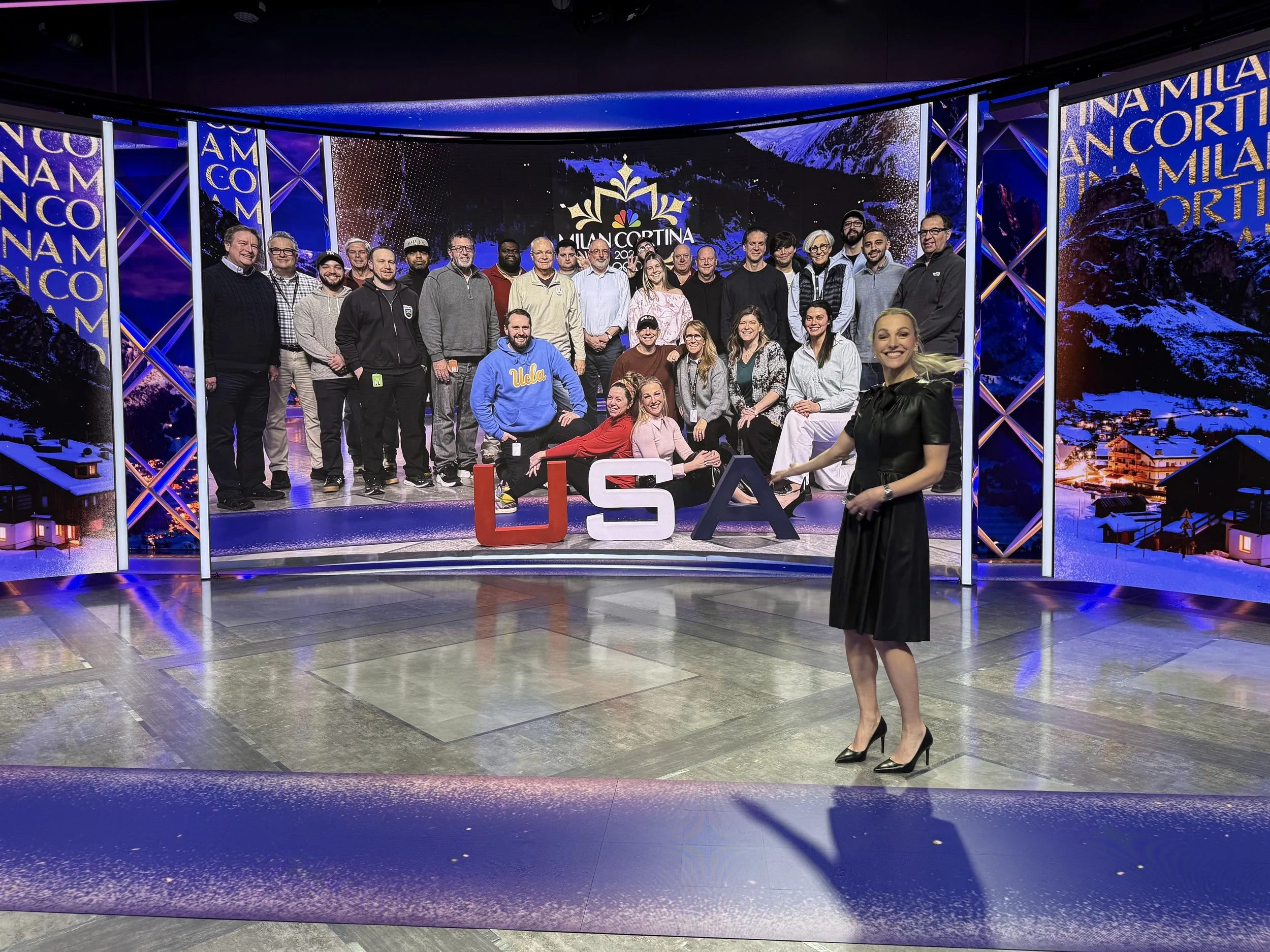
In this special post-Olympics episode, I sit down with my producer Ashley to answer your questions and to reflect on what it felt like to step inside the Olympic world once again, this time covering live events throughout the games from the USA network studios in CT.
We talk about the pressure athletes face, the power of preparation and routine (including my own - with a few fun glam tips along the way), and what it’s like working to develop chemistry quickly - for both athletes and broadcasters - working as part of a larger team. I share what surprised me most, what moved me, and what I’m still processing now that the lights have dimmed.
What You’ll Discover:
A day in the life of broadcasting during the Games (05:20)
Staying grounded when adrenaline runs high (12:17)
The team dynamic that makes live TV work (15:31)
Learning from athletes under immense pressure (26:26)
The evolution of Olympic storytelling (20:40)
The lessons I’m taking home (01:03:25)
This episode isn’t just about sports. It’s about the human experience inside the once in a lifetime moments. It’s about what pressure reveals. What teamwork teaches. What happens when expectations collide with reality. And what we can learn from those athletes who beat the odds that seemed to make their dreams impossible.
If you’re walking through your own high-stakes season, I hope this conversation reminds you that you’re not alone. If it did, take a moment to subscribe and rate Things No One Tells You, and share this episode with a friend. That small act helps us keep these honest conversations going.
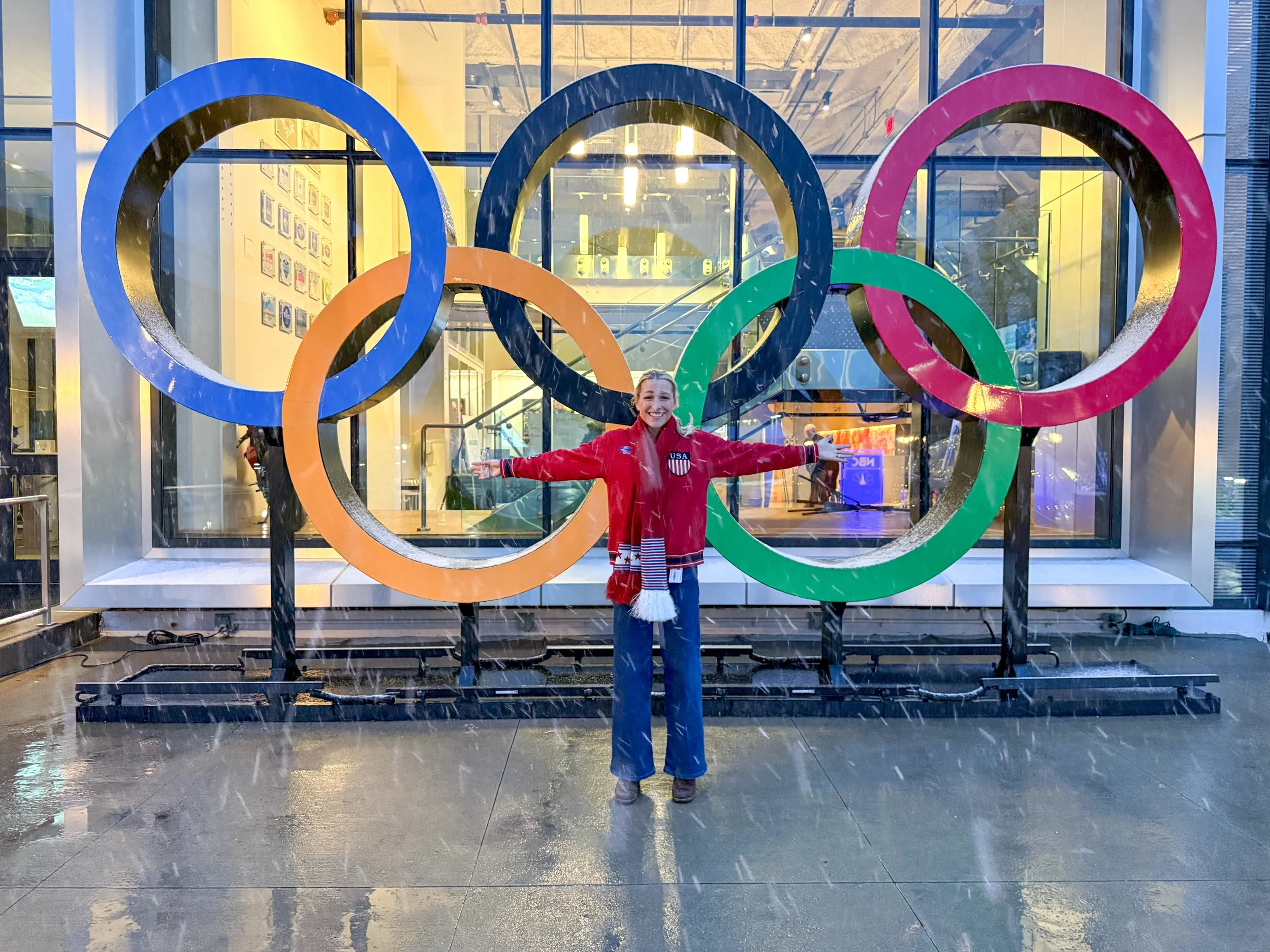
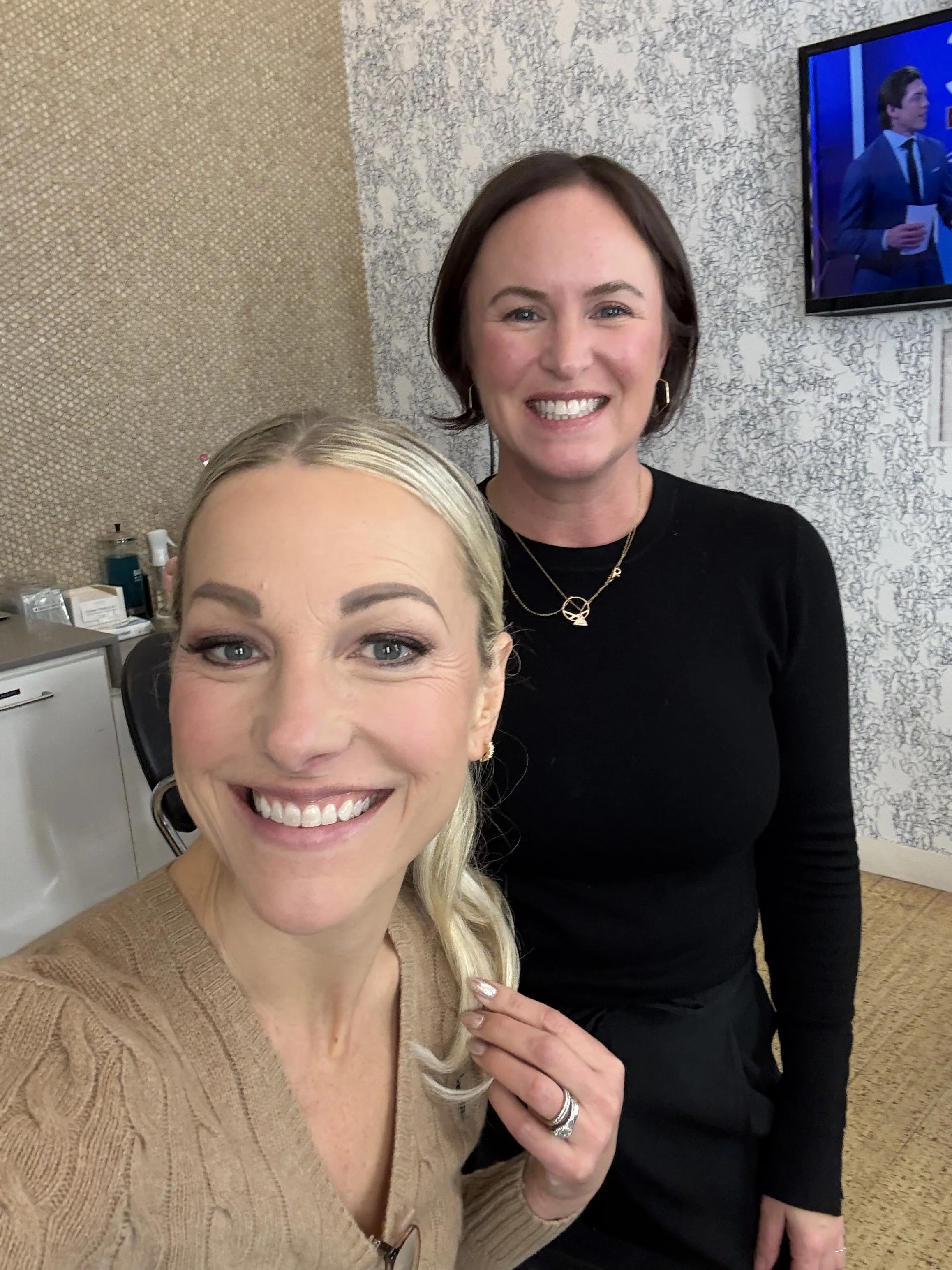
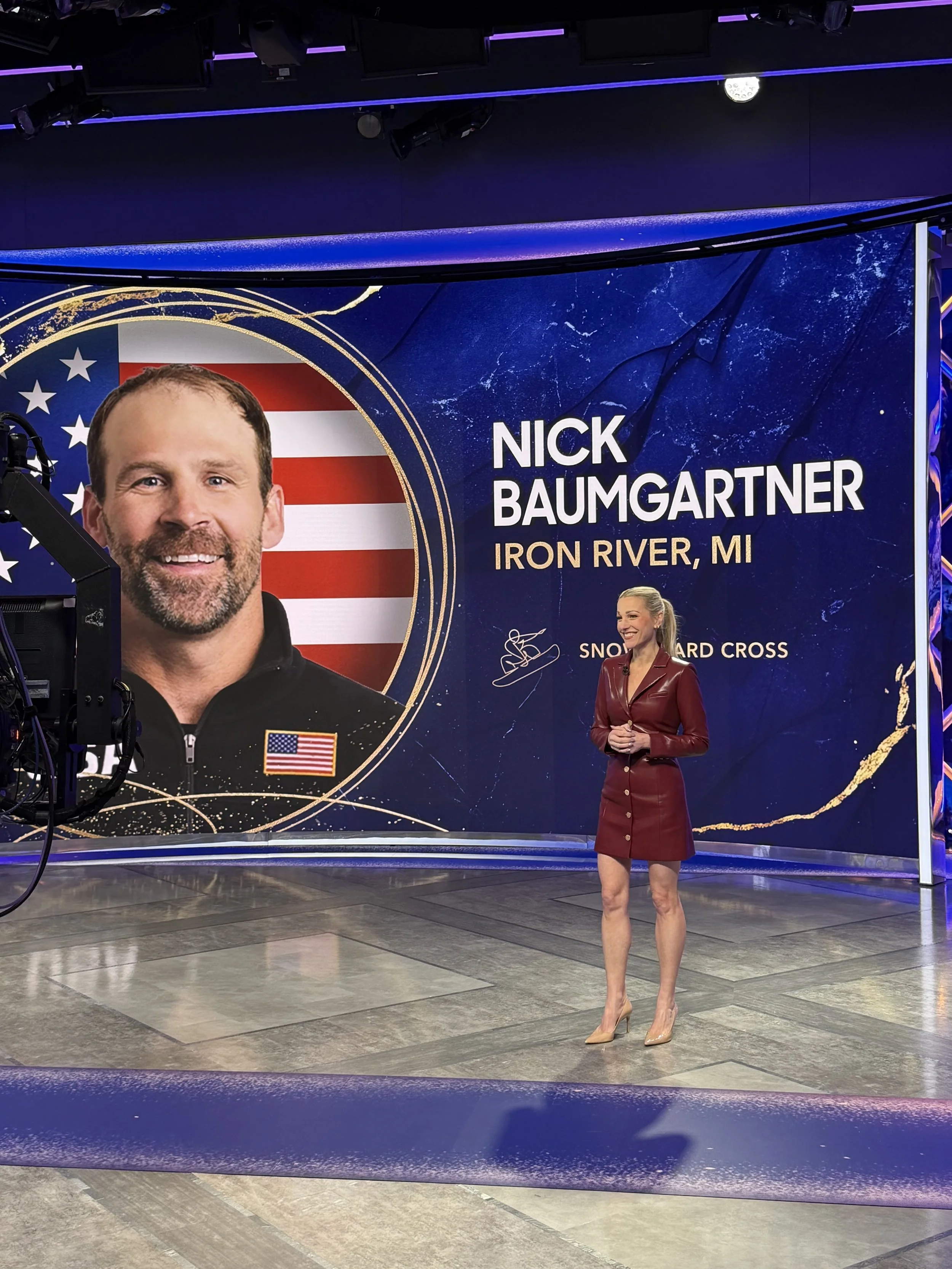
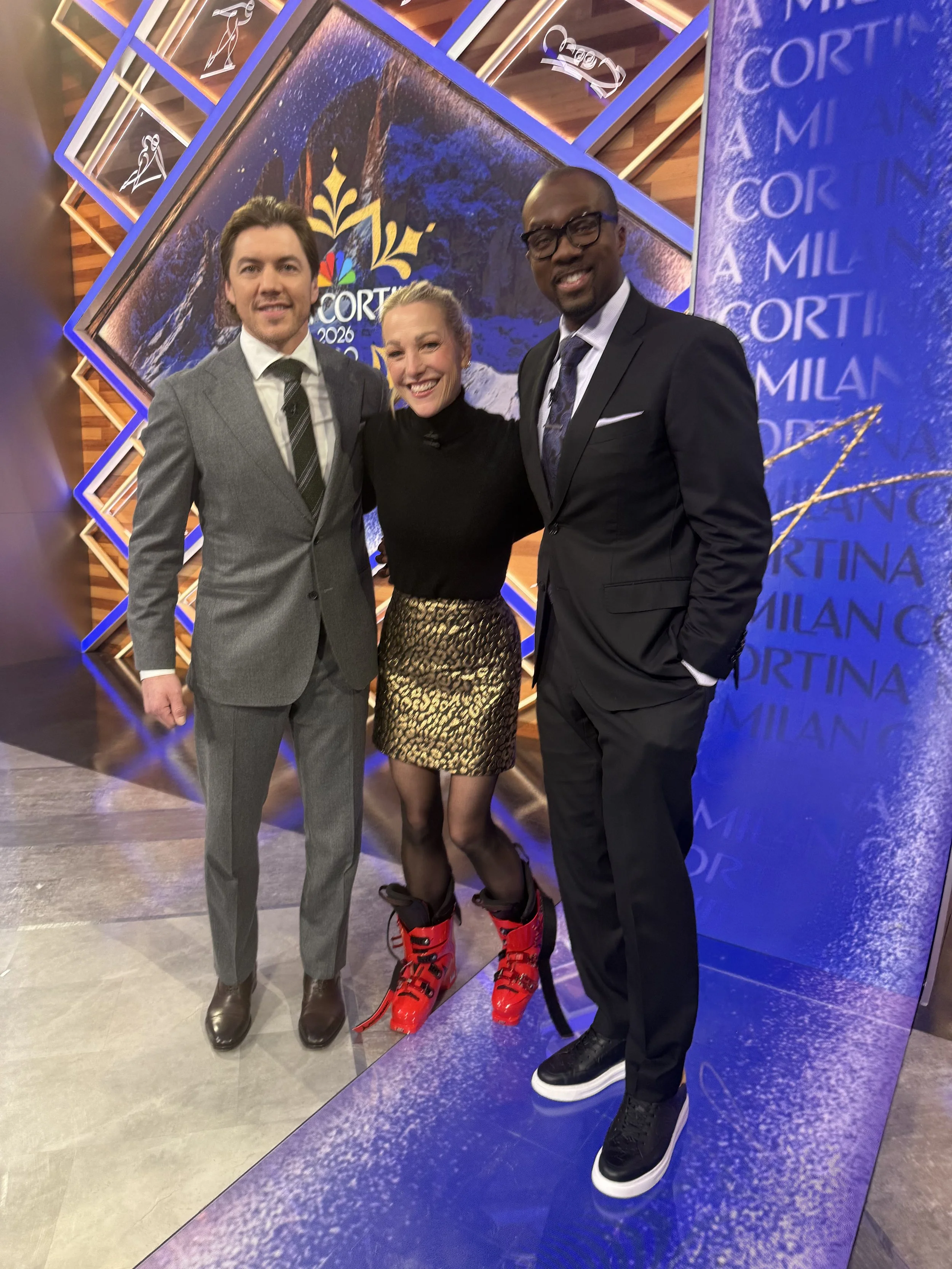
Be sure to subscribe to Things No One Tells You—Lindsay’s podcast all about the real, unfiltered conversations we don’t always have but should. From big names to everyday voices, each episode dives into the moments that shape us. Listen wherever you get your podcasts!
Follow along with Lindsay below!
[00:00:00] Lindsay: The thing that no one tells you about the Olympics is like, really, you end up covering this just amazing event, but you, I just never realize how close I'm gonna end up feeling and like how sad I'm gonna be leaving those people. And that sounds so ridiculous 'cause you're like, you're with them for like two and a half weeks.
[00:00:18] But there's just something about what happens in that time span when you're working really intensely, and it's ups and downs, like most of the time, it's great. Sometimes it's like, and I got so nervous 'cause I was like, please don't cry. Like, just get through this and don't, and that was so dumb because I wrote it.
[00:00:37] I'm like, but I really wanted to be able to thank the people that I wanted to. And right before the red light went on and it was live, I literally felt my heartbeat. And so that was the first time in a long time that I've actually been that nervous about a thing. And then I cried.
[00:00:54] Hey guys, welcome to this episode of Things No One Tells You. This is our first post-Olympic episode of the podcast, and I am so excited because we are actually talking about the Olympics,' cause there's a lot to unpack. And so I am here with my producer, Ashley, who's amazing. Hi Ashley. And Ashley brought up this idea about, like, Hey, people are asking questions about your experience, yada, yada.
[00:01:23] And I am so glad, Ashley, that you mentioned this because I am actually thinking about this. I'm like, there is so much more that I am processing. I think one of the things is that after you do this and you've been immersed for two plus weeks, you come out of it, and you're like, oh, there were so many amazing things that happened.
[00:01:41] There was so much I learned. And then you, if you don't journal, it's kind of like you're not putting it anywhere. So I think this is actually a lot of fun, and I've loved some of the questions that people have sent to me, too, just about the experience. So I'm grateful for this opportunity to look back as we're in a really snowy Connecticut right now, which seems really cruel to a lot of people who were trying to get home.
[00:02:05] or also people who just like ending this experience. It's been a journey.
[00:02:12] Ashley: Yes. I think that was one thing people wanted to know: what is the weather situation for you? And then I wanted to talk a little bit about some of the other questions.
[00:02:20] Lindsay: Yeah. Okay. Well, what have you been doing? By the way, should we catch up?
[00:02:23] Ashley: Oh my gosh. So I have been. Our weather has been unusual here in South Carolina, so that has been a lot for people to navigate because there isn't much prep here for those kinds of things. And we've had several major weather events, right? And so people have really been taken aback. But we had some gorgeous weather this weekend.
[00:02:43] It's really cold here again, probably a similar storm. We don't have any precipitation here, but it is very cold. It was almost 80 yesterday, and it is 20-something today. So
[00:02:54] Lindsay: Are you kidding?
[00:02:55] Ashley: Really drastic temperature differences, but all good. All good. Otherwise. Whereas my family's been enjoying seeing the Olympics being covered.
[00:03:02] Lindsay: Yeah. What is your fave? What was your favorite thing? Did you guys watch stuff together?
[00:03:05] Ashley: Figure skating was for sure the favorite of my girls, and so we enjoyed lots of the things that we got to see together, but that was really special.
[00:03:14] Lindsay: It was funny, I had a conversation with my brother one night when I was driving home from the office.
[00:03:19] 'cause for folks that don't know, I was not in Milan. I was working out of the NBC Sports headquarters, which is in Stamford Connecticut. And what's awesome is it's like 20 minutes, 25 minutes from where I live. But I always go there. So each day, I was going home and talking to my brother, and my brother was telling me that he was watching figure skating with his kids because he remembered how my mom would make us sit down and watch figure skating together.
[00:03:46] And it kind of became this routine. And of course that's before cell phones and all the things, but I was like, that is so cool that he is doing that because of that memory, you know, from our mom. 'cause I kind of tried to recreate that a couple of nights when I came home and my kids were meh.
[00:04:04] And I'm like, all right, we'll watch it on replay. But yeah, I do think it's still so cool if you can do that, like an appointment viewing special, you know, moment.
[00:04:14] Ashley: Yeah, for sure. And I think you're right, that kind of recreating that opportunity to sit all together, because with streaming, it has been different.
[00:04:22] Like it does change the way that we experience it. But I think for my family, there was a time during the first one after the pandemic, that we were kind of, we were overseas, and we wound up being able to watch a ton because of the circumstances of the pandemic, mic, and Oh yeah. It was so special.
[00:04:42] And so since then, we have really honored the time with, you know, when it's time for the Olympics because that was such a special event and kind of like you were saying like I remembered it from being a kid and doing it with my family. Yeah. And so now we have more of that, which I think is really fun.
[00:04:57] Lindsay: Yeah, it just gives me all you feel.
[00:05:00] Ashley: Yes. Oh my gosh, a hundred percent. And yeah, so special that there's that community component that I think is really neat. And I wondered about that in the studio. For one thing, could you just tell people kind of what a typical day looks like when you go in?
[00:05:15] Like what happens in the morning and then leading up to your coverage and then the end of the day?
[00:05:20] Lindsay: So, yeah, and great question. So one thing that's funny is I found this at these Olympics, and I think in the past I've done this, but especially this one, I have really tried to get into a routine because it seems.
[00:05:36] Like it wouldn't be this way. But the reason that I think that, especially if you're working out of NBC Sports, where it's like this massive, really awesome, like studio space, which is really big, but people are there 24/7, and the Olympics happen 24/7. especially because of the time difference, but like always, that's how it is.
[00:05:57] And so people are just working and grinding. And what I find is, you know, the standard is so high because, honestly, just because of how NBC puts it on, and there are so many different shows and platforms, just because of how big the NBC world is. And my show was on like the USA network, but. People are just constantly moving and going, and you find that there's very little downtime, and it feels like, oh, you've got this big day.
[00:06:27] There should be downtime, but it feels a little bit different because you're always sort of working on something, answering some question, and for me, a lot of that time is like, okay, you're inherent makeup. At this time, you really have to be there because there are 18 other people that are slotted in right around you.
[00:06:46] So like a lot of times you're in there with your computer, and you're littering. I like writing scripts or checking scripts, and I have a writer who's amazing, and likes the writer's communication, and we're trying, you know, whatever it is. So anyway, because of that, I found myself really liking it. Okay, this is my routine, and I adopted it like real quick.
[00:07:04] And I found that it kind of turned into a little bit of superstition for me. Like I had to have the salad bar every day,, and I can't explain why, but like, it just, I am a superstitious person, I think. And so, anyway, to answer your question, you know, you get there in the morning, I would get there, we would have a show meeting every day at 11.
[00:07:22] So for me, that was like my tent pole thing. Like I have to be in by that time as early as I can get in before that time is great, but a lot of my show team had already been there from like 8:00 AM or earlier because. Like the tapes, producers, the director, the producer, those people sometimes aren't going to bed until like one or two in the morning 'cause they're like continuously working on this next day show.
[00:07:46] So I would get there by 11, go to that meeting. At that meeting is where the producer has already basically put together some sort of rundown. Based on what the day's live events are. We were so lucky to have hockey, and one of the differences for me this Olympics was that I've done the same type of role in the past, and it's been amazing.
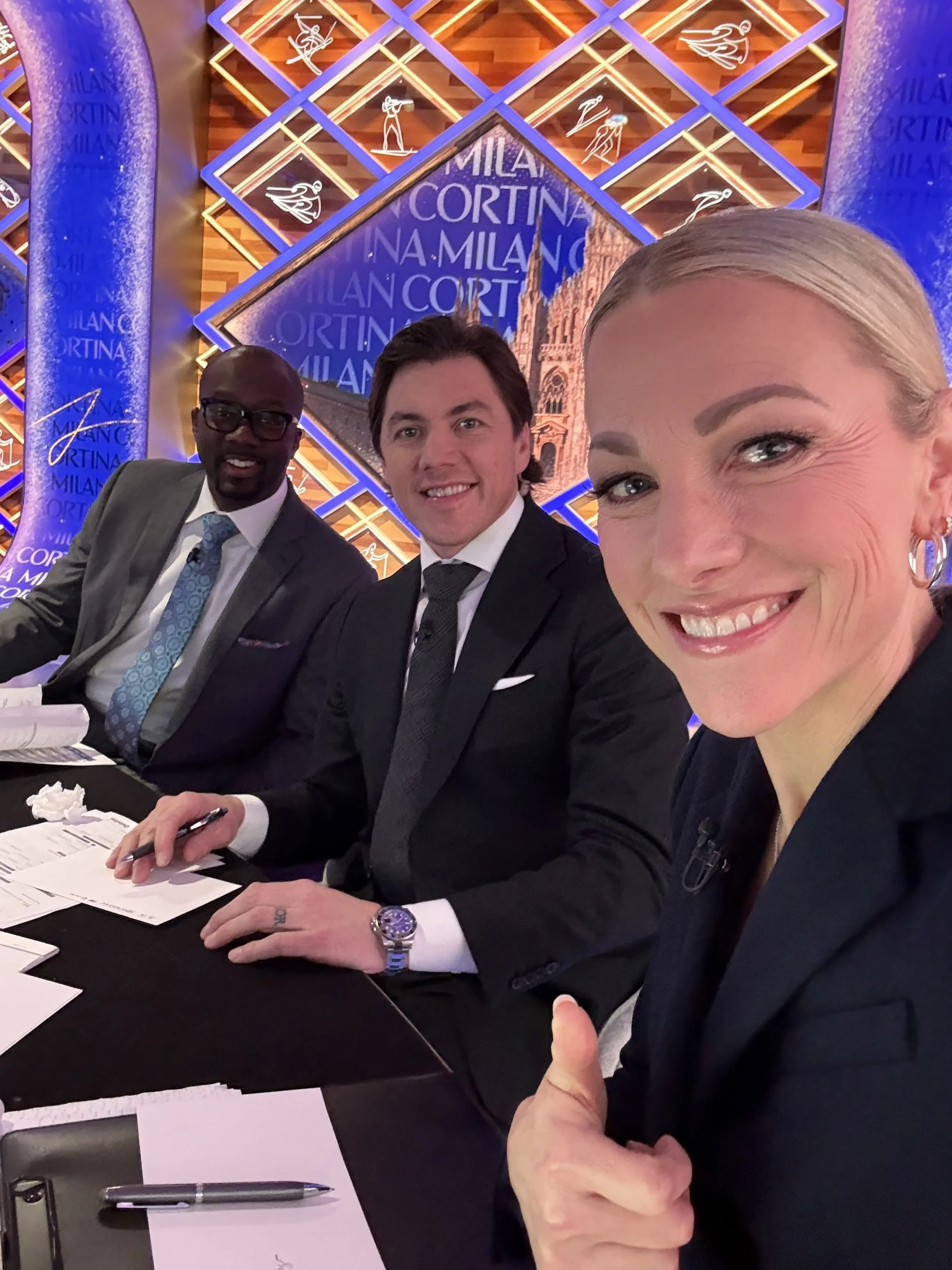
[00:08:06] I didn't realize what it felt like when you're actually doing these live events, and they're big, like the hockey to cover that live was absolutely incredible. And then for me, I ended up working with these two analysts, amazing analysts, Anson Carter, who was an NHL star. He has Canadian roots, and T.J. Oshie, whomI covered with the Capitals.
[00:08:29] And so I was on the ice with Oshi when his team won the Stanley Cup. And when I found out he was gonna be there, I was like, oh my God, he has to be our analyst. And I didn't, I knew, I was like, there's a big chance that he's not on our show. But then, when it turned out that he was on our show, it was just magical and awesome.
[00:08:45] And those guys together were great. But the point is that after that meeting with the producers, and like, there is a lot of back and forth that goes on before, if you're kind of doing it the way you should do it, 'cause you've gotta like to send ideas and you're flushing out stuff. But. She was a badass.
[00:09:02] Like Chloe would have this producer, this rundown built, and we would meet and then, you know, things change during the day, so it's like you have to react to that. But we would have the meeting at 11. I would zoom from there down to my little, my office, which was right outside where the makeup is. I would grab my lunch on the way, which was always from the salad bar, and get my coffee.
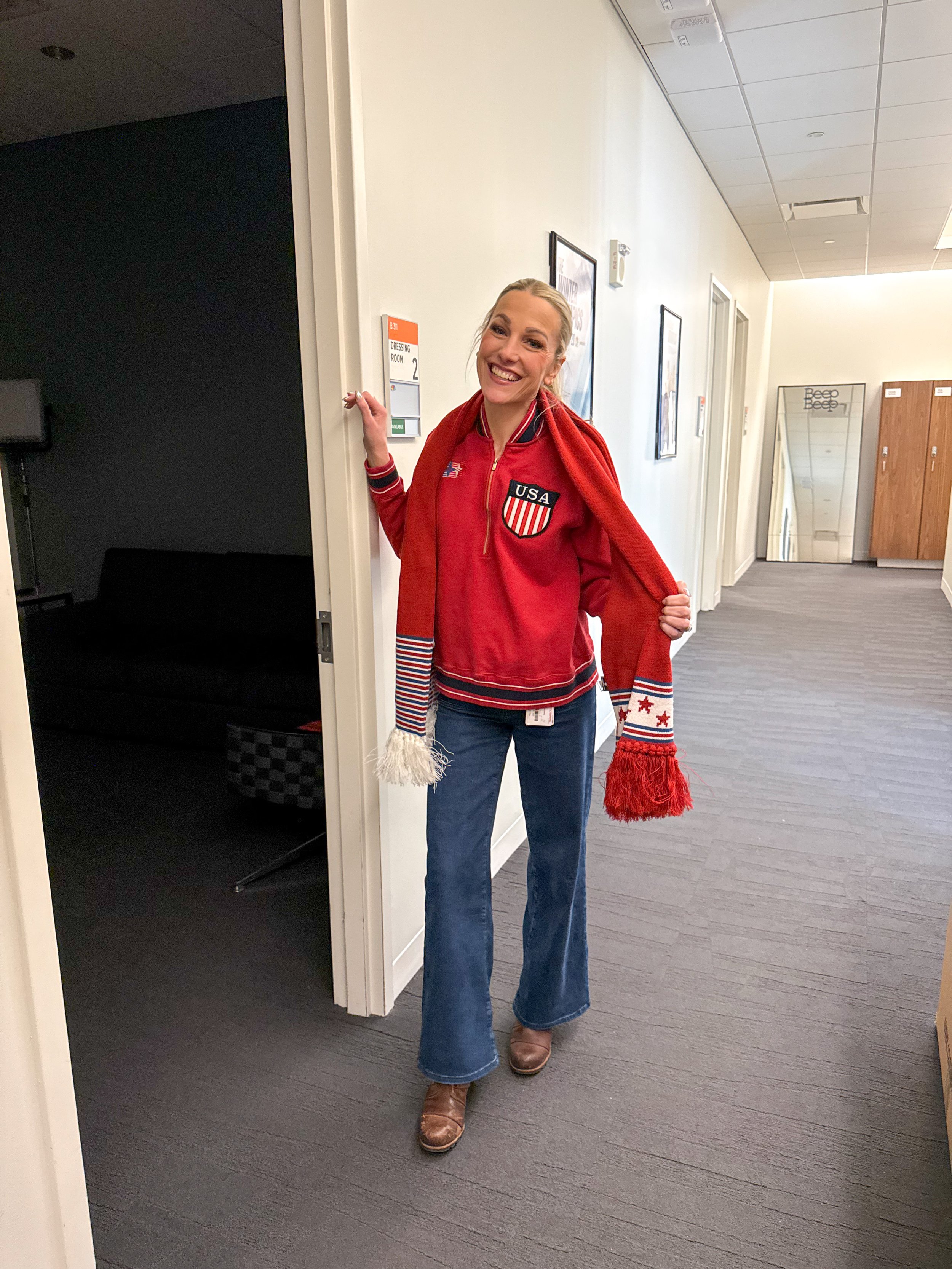
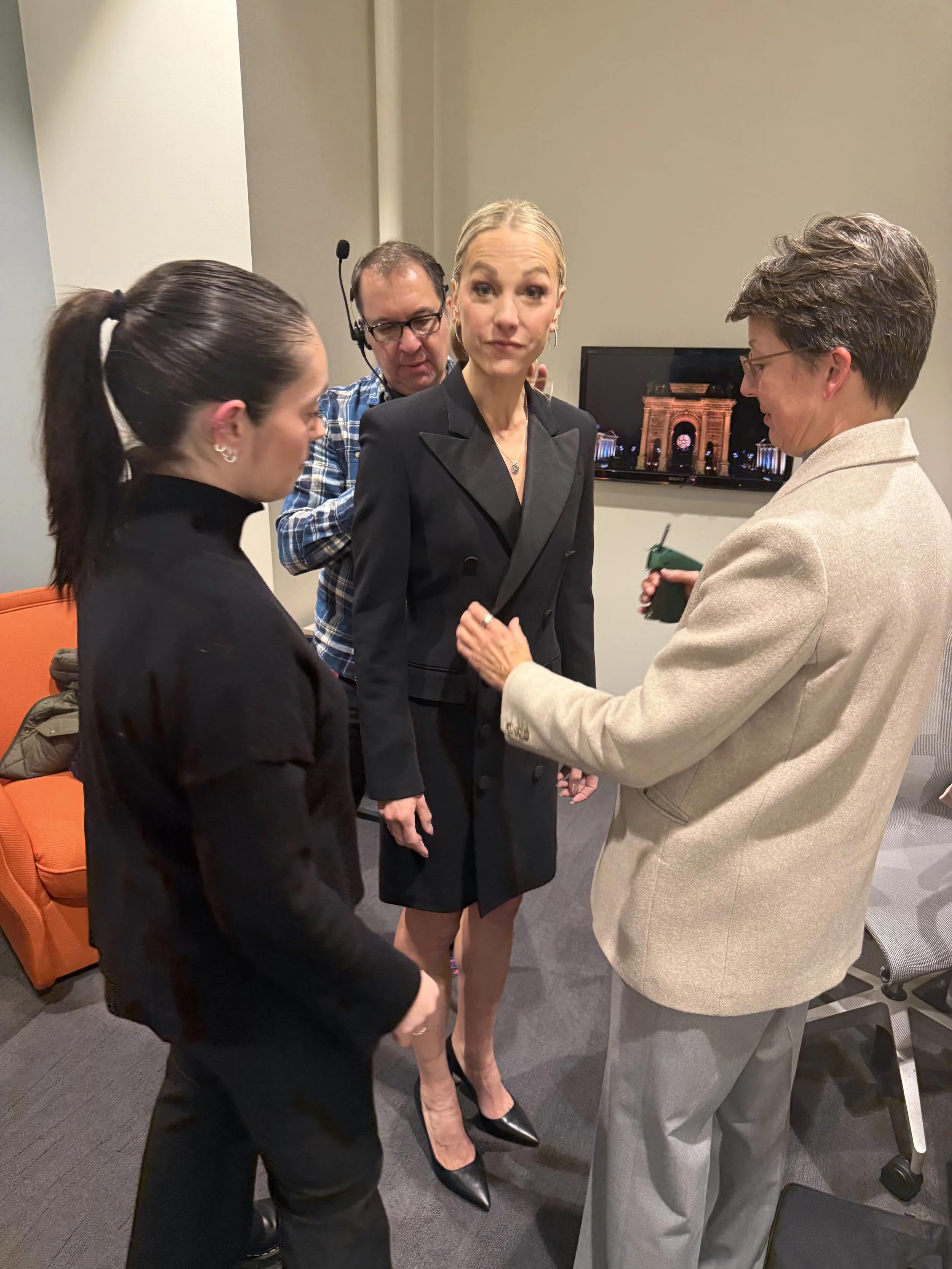
[00:09:25] Go put that in my room, then I will go. First of all, the wardrobe department is also amazing. And so they had what we were wearing, and this year, Ralph Lauren sponsored the Olympics and all of what we were wearing. So our things were amazing. Ralph Lauren, and they would have what I was wearing for that day, so we would make sure that was good.
[00:09:47] Then I would go into hair and makeup, and what was funny is it was always like, are we gonna do your hair up or down? And really, the wardrobe dictates that. And I realize people may not care at all about this, but I'm just going through my day. So then I would go to hair and makeup and sit there, and Kristen, my amazing hair and makeup person.
[00:10:05] And she would, you know, the artist, I should call her. She would do that. And then after that, when you get in, I would go into the green room, close my door, stuff my salad in my face, and then be like going over the final scripts while that's happening because of the luxury of having a writer and a researcher.
[00:10:22] It was helping to make sure everything's accurate, as they put things in there all the time. So you've got a script to work with, which is amazing. And Elliot is an amazing writer who's been there for decades. And so, you know, always like you're looking over scripts if you need to, like, adjust something to the way that you speak, you do that.
[00:10:39] And then next thing you know, you're opening the door, getting addressed and then they come in with the mics and all the stuff to put on. And some of the time it was like, it took a long time to figure out the microphones because Charlie, who is our audio tech, would come in and my dresses would be really complex.
[00:10:59] So like he would be sticking his hand, you know what I mean? Like that's the other piece. And so anyway, then we would go to set, and it varied from like my show was at 2:00 PM to 8:00 PM, and it varied from what we had day to day, whether we would go on a few minutes early or come on a few minutes late.
[00:11:13] And then you're just, you're alive. And for my show, it was like tossing out to these live events. Sometimes, if it was hockey, when we would join back in the intermission, and that's when I'd get to talk to T.J. and Anson, and that's it. And then you go to you, you're done at eight. I would swing by the cafeteria, grab something on the way home, and either go to my house or One thing that is amazing about NBC is they gave me the option of having a place to go, a hotel that is closer because it is really hard, you know, to straddle both worlds.
[00:11:43] And there were times that if we knew we had a big day and we were getting in early, like I, I definitely found it so helpful to have a hotel so you could just go and get sleep. Like sleep is paramount, you know? And I know a lot of people on my crew don't get it. So that was a really long answer. Sorry.
[00:11:59] Ashley: No, I love it.
[00:11:59] And I, it brought up, there were lots of audience questions that I feel like connected to that, but one that was crossing my mind when you were talking about the prep piece is someone had asked how do you stay present in the moment while you also know that all these next things are coming, what are some strategies that you use?
[00:12:17] Lindsay: That's a really good question. And I would think that it is very relatable to anybody in any circumstance. And also the athletes that are Olympians, it's like I have really found, especially as I've liked, gotten older or more seasoned, that really it is like the good part of the job is in the people.
[00:12:44] And yes, like it is so exciting getting to do and for me, like I just get energized and I feel adrenaline when I'm talking about sports, especially if it's something that has high stakes, a nd that's all the Olympics is. But it really is the people who are with you, who are working with you on the day-to-day.
[00:13:03] Like that's what the experience is because you're all working towards the same thing, and it doesn't mean anything if you're not. Like in it together because it is a very much together thing. So I think part of the way that I found to stay present is you just have to kind of ground yourself. And I like getting to know the people that I'm working with at each step of the way and sort of like bringing that to the forefront.
[00:13:33] An example of that, and I haven't ever really thought through this, so I'm just talking out loud as you ask me this question, but like when I would be in the meeting, yes, you're all in there because you have to get all the details of what's gone on in the rundown, but you have to be present because you're throwing out what your ideas are.
[00:13:49] So like literally everything else you have is put away. That's sort of an easy situation. But then, when I would be sitting in the makeup chair, that's a time where you can kind of do what you wanna do, just as long as they can do their job. But I found that, even as long as I was, Kristen has actually become a really good friend, and it's like.
[00:14:09] Putting that to the forefront. Likewise, if I had a situation where I'm like Kristen, I'd have to finish writing this because this person needs this for their job right now. Like, that's kind of how I did it, right? Like by being open and acknowledging the person that's with me, like Charlie, when he would come into Mike, me, there were times that there would be people coming to take me to the studio, which is stressing him because he knows that he's gotta get it done.
[00:14:37] Which ultimately probably came down to me deciding I was gonna run to the bathroom when I probably should have gotten that first. Right? So I think it's just realizing the people that are around you, and also part of it is preparation, like making sure that you have, you're as prepped as you can be.
[00:14:54] And that's another thing at the Olympics, it's like these are sports that you're not covering the rest of the year, per se. So you have to learn how to lean on the people that are there with the jobs that they have. Like my researcher, John, it's like. I always call him Furlong 'cause that's his last name.
[00:15:10] But he, I would be like, Hey, I don't know all these things going into it, but I need to understand in the moment when to say to him, Hey, can you tell me the last time that this athlete from Germany, blah, blah, blah, blah, blah, whatever it is. And then that's his job, you know, to find it and figure it out. So it's just kind of like understanding how to navigate it.
[00:15:31] But the other sidebar here is Melvin working at the Today Show. It's probably not a coincidence that it's both NBC. Like, whenever I've done anything with the Today Show, and I've been there, and I've watched him, it is exactly how they operate. Meaning they're a well-oiled machine. Everybody has a role, and it'san they do their role so that you can do yours.
[00:15:56] And that's kind of how the system works for everybody. It's like, so at the Olympics it feels very much the same, but it also feels like you don't, both circumstances you don't have a lot of time in between, but it's like you're leaning on the people that are with you that have certain roles. And that's also why I think at the Olympics, you succeed faster as a group, as a team, and therefore also as an individual.
[00:16:19] If you come to the realization that, like, you kind of have to figure out how to get your own feedback, like, and that's not a negative, it is just. Everyone's got a role in those circumstances at the Olympics; there's no time for anyone to be like, Hey, everything's working right. Whatever. You've gotta just be really communicative.
[00:16:41] Like, Hey, here's what I'm doing. Is this working for you? Is my flow working? And that might sound really boring for people, but I really do think that's relatable to other industries, like being open so that there's a line of communication because we've, you know, this time too, it's like we have to have those conversations between, Hey, this script needs Pluto be updated in like 30 seconds.
[00:17:02] Who's doing it? It might feel better to me for me to jump in and be the one to do that. However, that's Elliot's job. So maybe it makes more sense. You know what I mean? You have to figure out, like, and leave your egos at the door, like, and saying that from experience, like that's hard sometimes, right?
[00:17:19] Ashley: I love that.
[00:17:19] I think that it makes me think that it's a lot of puzzle pieces fitting together to make it all flow because there are so many moving parts at any moment. And then you're also reacting to live events that are happening with your prediction. Like, there's not, you know, you all are doing all these things to help things flow, but then at the same time, you are taking in all of these, you know, unexpected events that then have to be managed in a group with dynamics that maybe you don't have all the time.
[00:17:48] Totally. And I wondered that too, like people, there were a couple of questions about the anchors that you had with you. Did you get to talk with people before, or were there times that you went on and you really didn't know the person, and you all were talking about a sport, and you're just going for it?
[00:18:03] Lindsay: I mean, this time, for the most part, I was able to connect or talk to the people, especially like if it was hockey, we would chat. But yeah, that's also a scenario where it kind of takes a couple of days of reps because you're figuring out the flow. Like, what is this person used to having? And if they're creating, if they're wanting video to run, when they're talking about a certain thing.
[00:18:27] You know, my job was like, how can I best tee them up to talk about this? However, you also really want it to be organic and conversational. So yeah, I mean, there, you know, sure, there are times that you're going on that you're like, oh, I wish I could have talked to this person more. Or it's like, just a little sliver of time right before you're coming out of a commercial or whatever.
[00:18:47] For me, a lot of it was that I would see people in the makeup chair. So, like Ashley Wagner, who is our figure skating analyst, she's amazing and would like to break down with me, okay, here's what people in the figure skating world are saying. And that information is so valuable. And especially when it came to like Ilia melanin and him, you know, what happened to him in the, in the men's.
[00:19:13] And it's just like, it really was awesome to get their insight. So I find luckily it was a little bit more time, but I've definitely been in positions where you're like, okay, wait, what are we doing? But also. I feel like that's kind of on me, too. It's like you have to just know what to ask or come to the table with notes or at least be prepared with something, you know?
[00:19:34] Ashley: Yeah, and you had mentioned in your stories about a newsletter?
[00:19:38] Lindsay: Yes. Oh, I should have brought it. Yeah, there's a newsletter. So it was The Daily Olympian, which is a newsletter that is pretty thick, that actually is created every single day. And it started from day one, went straight through every single day of the Olympics, and it's a prep doc basically on what, what's happening that day.
[00:19:58] And it was amazing because this year they made an audio version and I find, and I found for myself that it was perfect to listen to, like on a drive-in, on, you know, whatever, if I wanted to try to get a quick workout in. And when I say that, it's laughable because I know there are people on my team who literally barely slept.
[00:20:19] So I feel guilty, but I'm like. I realized that, like, feeling good is just a, you have to withstand the endurance of it, kind of. But yeah, so the Daily Olympian was amazing and a great reference, but then they've got these massive research docs that are like on every single sport, that you can really get deep in the weeds, but they were really helpful.
[00:20:40] And then the other thing is like social media, you know, I mean, a few games ago, we didn't even have it. So it's like you think about now how people are sharing some of the behind the scenes of the athletes and it's incredible because of how much you're able to pull from their own socials, all the things, you know, and they've got a whole department now at NBC that is just topnotch, you know, that really focuses on that.
[00:21:03] It's really cool.
[00:21:05] Ashley: That is fascinating.
[00:21:07] Lindsay: Yeah.
[00:21:08] Ashley: Someone had written in and asked, what inspired you to become an Olympics broadcaster?
[00:21:13] Lindsay: Oh my gosh. So my internship, in 1996, which was when I was a senior in high school, was at the Atlanta Summer Olympics. And I, it wasn't necessarily like on my radar that was something that I would've thought that I could really do, but I loved the experience.
[00:21:36] I was working with USA Today, so my dad was a journalist at USA Today, and covered sports for years, and covered the Olympics. And so that was why it was, I think it, it always really meant something to me to have a hand and be able to strive for that. But I started my career, I started in news, and then moved to sports.
[00:21:57] I was lucky enough to have the opportunity to do it, and my trajectory with it was working at a TV station in NBC and then beginning to do some national work with NBC, kind of through that system. And then after that, is when I had the opportunity to do the Olympics, so I was able to work in Torino.
[00:22:17] In 2006 I went to Torino to work as I was on the news desk, so I was basically like a correspondent doing features, and that was just an incredible experience. And I was working as a reporter at the time, and anchor in Washington DC And so my station let me go and do that for the network. And it was just so magical.
[00:22:41] And so since then, I've been lucky enough to have opportunities to do 'em in almost every game. And once you have a taste of it, it's just incredible. It really is. And there are so many different roles that you can have. So, like being a reporter, I've hosted gymnastics in Beijing.
[00:22:59] I did like a show that was all gymnastics, and I was hosting that. And so it's really cool. I do love, love, love the live component, like that's what was so thrilling about this last assignment. But, yeah, and you always come out of it with things that you're like, God, that was so exhilarating, and you know, it was just really a great experience.
[00:23:20] Ashley: I love that. Somebody had asked what your favorite moment from these games was for you?
[00:23:27] Lindsay: So what's crazy is. The last time I was in Beijing for the winter games, 'cause ba, when I was doing gymnastics, I was in Beijing for the summer games. And then the last winter Olympics prior to this one was Beijing, where I was also working outta Stanford.
[00:23:41] And I did the same thing. It was a day part for the USA network, and we covered some of the women's hockey, and that's where my analyst, Angela Ruggier is a four-time Olympian. She was my analyst there. That's where I first met her. And I just, it was so much fun working with her and breaking down women's hockey.
[00:24:00] But what was really magical this time is between then and now, women's hockey has exploded, the creation of the PWHL as one entity that is the professional hockey league for women. And that's been incredible. So hockey has really come together. She's been a big reason why, like she is very vocal and a big leader in that.
[00:24:25] In that fight. But so to see that from then to now and to have her back as an analyst, and then when we were watching and had the gold medal game on our air, and like watching that with her, I mean, I still get chills. It was so crazy. And it was so cool that it was like full circle for me having first worked with her in Beijing, but now having this moment where we had the chance to call it and it didn't look good for the US and in part of that game, and like I, I had finally gotten comfortable with a couple minutes left in that game, looking at her and being like, okay, so if Canada, then what are we talk like, you know what I mean?
[00:25:01] Like, where do you wanna go? Because I waited until the time, like it was winding down, because I didn't wanna, I don't know, I, you know, athletes are also superstitious. So we finally talked about that, and then they tied it up and anyway, it was just incredible watching her and being there with her and having that athlete insight.
[00:25:20] I just, there's nothing better than like. Sitting with someone, watching it with someone who has been there, that has been in it, that is also so passionate about it. So that definitely was one of my favorite moments. And then the other favorite moment was definitely watching the men win gold because we were watching it as a team on the very last day, and we were in our meeting when it was happening, when it was winding down, and like everybody was just so excited and invested.
[00:25:46] And so that was really special to just be able to watch it as a team. And so many people were leaving the building because of this blizzard. So, like we had lost a couple of people on our team who had to leave early, and that was fine. We were able to say bye. But it was like just knowing that we were the last ones kind of left to do TV, and it was really cool.
[00:26:03] And so I don't know, those were two of 'em. But one thing that really stood out to me, these games that in the past I knew as a factor, but I haven't really absorbed it the way I did, is just the pressure. These athletes are under, and I think it was because of what we saw with Ilia Malinin, you know, to some extent with Lindsay Vaughn.
[00:26:26] But like with some of the other athletes realizing, especially even with these hockey teams and watching the trajectory of how they almost lost a game, or they didn't play their best game and had to sort of create this underdog mentality. The pressure on athletes is insane, and the way they deal with pressure is like the difference between gold or not, you know?
[00:26:53] And that to me is just, it was highlighted in a way this time that became really interesting to me, especially with Illia, because talking with Ashley Wagner, who is the figure skating expert, it was like he was so. Surefire. You know, like everyone's calling him the quad god. He had that epic skate for the team competition, which absolutely helped them win the gold.
[00:27:17] But when you're thinking about the whole, like his individual performance and how he unexpectedly fell, it's like the pressure, and that's what everyone was saying, and it's like you don't understand when you come in, and you're the quad god, and there's nowhere for you to go. Having the athletes explain how the mind of a superstar athlete works, and when you're dealing with pressure, and how you have to do so much mentally to not let that get into your brain.
[00:27:46] And if it starts to seep into your brain, and if you recognize it. Then these superstars have different methods of literally being able to switch it off. Like Mikaela Shiffrin was so vocal about being upset after her runs, that she didn't do what she wanted to do. And not just in past Olympics, but this Olympics.
[00:28:09] And someone was explaining to me that she is a verbal communicator processor. The way that she processes her scenario that she needs to do as an athlete to get back to baseline is by saying it out loud, 'cause there were times that we would be like, wow, she is really vocal about how she's doing.
[00:28:26] And I just found it fascinating. So I think my eyes were open to that a lot this time, and just how otherworldly they are. And the last thing about that is, Ashley, consider this. Hilary Knight, the superstar captain of the Women's Gold Medal-winning hockey team, the US Hockey team. This is her last Olympics.
[00:28:47] She says she broke, set a new record, broke a record for goals and points at these Olympics, and the day before her game, two days before her game, she proposed to her girlfriend. So I'm like, for anybody that has ever been proposed to, or certainly on the other end of proposing, I think that's stressful for the person that's trying to pull it off.
[00:29:10] The fact that she would consider doing that in the Olympic Village because Brittany Bowe, who's a speed skater at the Olympics, is her partner. The fact that she would do that two days before the biggest game of her life is like. That's just amazing, and I hope I'm saying it right, two days and not a day, but I'm still in the Olympic mind war.
[00:29:32] But, I was just like, if that doesn't tell you how they're wired differently because of what they can handle, I don't know what does. Likewise, I just love it. And then she's the one who's the difference maker ultimately in that game for Team USA. So it's just they meet at the moment. That's the thing.
[00:29:51] Like in, and that's why I love sports so much, is in any sport, I'll usually like, when you're talking to someone who's won it, whatever it is you're covering, it's they understood the moment, and they met the moment, and there's so much in that sentence, you know? Really.
[00:30:12] Ashley: Yeah. Yeah. That makes me think about both the pressure, the added pressure of social media, because I think there's that whole piece of like everything is captured in real time and in a permanent way that transcends what was true before social media. So there's that piece, but there's also, so I think that could be really hard, that pressure piece.
[00:30:35] Yeah. But then there's also this like whole person component that I don't know how much you, because you have been working so hard through all this, I don't know how much you have seen of that in the social media space, but like getting to see some of the figure skaters, some of the hockey players, like really opening up from their perspective and from their own voice, their own space being themselves.
[00:30:55] There's something about that piece that I really love, and I love letting, you know, having our kids start to see is yeah, that they can meet the moment and they are whole human to are living their whole life. You know, their full life and their sport is of course a central part of their life, but it also is.
[00:31:12] A part of a person's life. Like they're a whole human, you know? And I loved all of that.
[00:31:17] Lindsay: Yeah.
[00:31:18] Ashley: So it's interesting to think about the ways that the social media component is changing, the nature of some of these, of the pressure points, both harder, but also there could be some benefits.
[00:31:31] Lindsay: That's so interesting that you say that.
[00:31:32] That's really, I love that you brought that up, because there are two things. Yes. I think you're right. I think it's like if we use social media as a tool to communicate things that are positive or maybe they're not so positive, but they give a look into someone's experience. I mean, it's why we do this podcast, right?
[00:31:54] It's like things no one tells you. It's like, what are you trying to find a common ground in things that you don't normally talk about. Like, I think. That if you use it for that type of thing, then it can be really great because exactly what you're saying, yes, you're understanding that this person is willing to share that they feel this way.
[00:32:15] You're just like them. And you know, like for a really long time, when I was covering NASCAR, I would try to explain to friends who were like, I don't get the sport. Like a lot of times, people don't wanna follow a sport 'cause they're just like, I don't understand it. Its just seems boring. But if you hook yourself, I would say to one driver, choose a sponsor that you like.
[00:32:33] Maybe you like Cheerios, and you're picking that driver, and you follow along. If there's something relatable to connect with someone, I think it kind of starts to change the game, and then you get it. But anyway, that's one thing. So, I do think it can be very powerful, especially when it comes to the vulnerability that athletes are showing. The other thing that you mentioned that I was like, this is really important, is Alyssa Liu came to my mind right away when you started talking, because Alyssa.
[00:33:05] I ended up not liking skating. She felt she was forced into it early on. Like, she was such a great skater when she was a child, but just came to a point where she was like, I'm done. I can't do it anymore. I don't wanna do it anymore 'cause I wanna live my life. Did that, went and famously like, did all the things, was a normal teenager when she could have decided to put all her effort back into it.
[00:33:27] You know, I was hearing that her coach at first was like, that's crazy, but ended up working with her anyway. And then what does she do? She comes back, and she wins the gold medal, and now it's on her terms. And that's not just her. That was the other thing that I felt, besides understanding the pressure, it was seeing people, specifically at this Olympics, from Alyssa to also, there was the figure skater who was 42, who was done and decided.
[00:33:58] You know, I, maybe I wanna go back and try it. It was, and she came back and competed, and like, that was everything. The fact that there were several examples of people who should have been done, maybe thought that they were done, and then decided, you know what, I wanna give it a go. And came back and achieved.
[00:34:17] Like, there's something so important and powerful in that. Like I really do think that we have the power within ourselves to do things that are great that we want to do that are great. And I think one of the problems is we tend to listen to others, and that's human nature. And we listen to expectations and we listen to naysayers, you know, and that, to your point about social media being a positive, I think that's one of the things that can be scary about it is obviously when people are paying attention to what folks are saying about them, you know, like I've heard that in football circles when coaches have said it's really hard to coach.
[00:34:56] Now with social media, because the younger guys oftentimes are paying attention to what people are saying about them. And that's really hard, you know? And there are people that say things that don't understand the sport or the way that money works or contracts work, and say stuff like, how can this guy, and the problem is you now, it's so much easier for it to seep into the minds of these players, and really you're too young to be able to navigate that and process that in a way that is healthy.
[00:35:30] Ashley: Yeah.
[00:35:30] Lindsay: You know?
[00:35:31] Ashley: Right. I think all that piece has got to be part of what. Need support for that, that is one piece of the, I don't know that mm-hmm. People are necessarily coaching directly, but that part of coaching is like helping athletes navigate. I'm sure, because right. There is so much pressure, and there's a balance between not leveraging at all and letting it overtake.
[00:35:55] And I'm sure that's really hard.
[00:35:57] Lindsay: Yeah. Yeah. I agree.
[00:35:59] Ashley: Because you want, I mean, again, it can be so powerful because it helps with the human connection and all the things you said before, that it is just relatable. It makes people more relatable who are doing these phenomenal things, but then it can be.
[00:36:10] Weighty, I'm sure.
[00:36:12] Lindsay: Yeah. I mean, and there are ways that people use it, like example, and this is like really out there, but you know, talking to my friends and the hairstylists that were there at the games, I mean, they pay attention to people on social media because they're getting ev it's like everyone does it and it can be extremely beneficial.
[00:36:27] You know, like you're, it's funny. It's like, 'cause they, and they get ideas, you can get ideas from it. You know, I don't really have a good point there, but I just think it's such a part of our society now, and really understanding where it's going and seeing the weight that's put behind the social media aspect at the, at these games.
[00:36:44] I'm like, okay. Like it's really, there is so much that was put in also like content creators that were hired for the games, you know, and I've been a part of a couple different campaigns like that in different sports, including horse racing. And at first I was like. I would pay you to have this experience.
[00:37:05] This is amazing. But then you see how it really is used to help a sport evolve and see the behind the scenes. And I just think it's really awesome. Like it's where you have to pay attention to social media. Now, as a news source, I feel so strongly about that. You have to. And I remember the first time I was on SportsCenter, not, this was a few years into when I was hosting the first time, where it was like, hey, in the show today we're including, I forget if it was Steph Curry or LeBron, but they were like, Steph Curry posted, da And I remember my reaction being like, we're actually like, we're posting something on, I guess it was either like, it must have been Instagram at that time, but early on and look where we are now. And it's because everyone controls their own narrative, you know? and sidetracks the conversation for another time.
[00:37:59] But it's why it's really important for everyone to be their own brand. And I really believe that. And I don't just mean in my industry, I mean just being smart and thoughtful and taking time to think about what that means in your industry for yourself, you know, especially also with the AI coming the way it is, too.
[00:38:20] Ashley: Oh my gosh, absolutely. Right. And I think, again, going back to like the athletes and thinking about hearing their perspective in some of this, it's how to be authentic, but also within your professional space, your industry space and thinking about how to navigate all of that in a way that rings true, but also feels comfortable to you and that you can still have your private life.
[00:38:41] I think all of that is just a lot to navigate, but it's also part of what makes it. Yeah, it makes the Olympics more and more, I think, intimate for people to really get to experience them and see the hard work that goes behind the scenes that is touched on in, in shows like yours, that you get glimpses into.
[00:39:01] But there's definitely more that can be seen with, like you said, because now these are new sources as well. And so it's giving us a way to get a deeper dive into some of the behind-the-scenes that I think can be really powerful for people. And also inspiring for people who are, you know, young people wanting to learn more about what the elite looks like.
[00:39:20] Lindsay: Yeah. It's funny because, it's, I met an amazing young woman when I was there, who was, we were just chatting. She is starting out and doing some play-by-play, and I'm like, it is really awesome that you are starting out and doing this, because I don't even know right now, like what to tell people when they're asking,g like, Hey, how do you, what do you recommend starting?
[00:39:43] And it's like the way that we did it that I did, it was. You know, one way that is now basically obsolete. Like, there's so much, there's so many different avenues in which to do things like broadcast television and get into it, and so many different things. I think it really comes down to liking the skills that people have, that you can learn.
[00:40:05] And I really truly believe that one of the biggest skills is. Be a good person and be like, pay attention to the opportunities that you're having and the people that you're working with. Like, you know, that is a very much larger piece of this whole puzzle than I definitely ever realized when I was starting out, you know?
[00:40:27] I know that sounds like big whatever, treetops, but it really is.
[00:40:33] Ashley: No, I think I, I think about how often that comes up in the show where people are like.
[00:40:37] Lindsay: Yeah, you're right.
[00:40:38] Ashley: You know, in a lot of different industries. I mean, people say like, it's the people, like I want to connect with people I like. I mean, there is just this like component of being a good person, being a nice person, and you had said earlier, and I've heard this come up several times in the show, is like checking your ego at the door.
[00:40:53] And I think about that and the teams and with the Olympics and also within the broadcasting space that like, there's the. Being able to rise to meet the moment, but also to make space for others. And I think that tension between those two things can be challenging for sure.
[00:41:06] Lindsay: I do too. And I think, also like asking for what you need for what you need, that's another thing that I feel like people, that's something that people don't tell you, that there is a fine art to it.
[00:41:17] Really. There's no shame in asking for what you need. And I think, for me, that can look like, Hey, I need some more information that I'm looking for to feel confident going into this sport that I know very little about, and I wanna write it down. Or it can be, Hey, I need my ponytail a little lower.
[00:41:37] I don't feel confident. Like seriously, like, yeah, that matters. And it sounds really cheesy, but I have fake hair that I'm obsessed with, and I brought it with me and used it all the time. And Kristen finally got to the point, like, would be like, okay, is it low? Is it high? What are we doing? And you have to feel comfortable being like them.
[00:41:54] I love what you're doing, but right now I don't feel great. Like I know what I need to feel like myself and feel anyway. That probably sounds vain, but it's not. It's just like, you know, being used to being, just understanding what you need to function and being kind about it. And, yeah, it's, that's, and also as a woman in sports or in any field, it's that too because now I'm sort of on this side of things that I like Being a mom is my favorite thing and being a wife and like being here for my kids, like, is I love that so much and they're still the age where they still do need me.
[00:42:38] It is okay for me to be like, I just had the time of my life at this event, and thankfully I was able to straddle a little bit, but there were times that I had to be like, okay. Tonight, I'm, I know that they're good. Like, but I'm choosing this because I know that I need to be prepared in this way. And, I think that the motherhood situation, I hope has evolved to the point where I was really scared to talk about that when I was earlier in my career, because I felt like if I would say stuff like, well, my kids that they're, it was kinda the mentality like, well, there's someone waiting for your job.
[00:43:21] Do you know what I mean? Mm-hmm. And that's, and I'm not saying I'm proud of that, but I think now it's something where it's, it feels good to feel elated by both and know that, you know, what, at the end of the day, what matters is like that. Both of those things light me up. And that means that sometimes.
[00:43:43] One is gonna take more priority over the other, you know, I don't know. I, you live it. I'm not making sense. Like, what do you think?
[00:43:50] Ashley: Noo. I completely agree, and I think that I used to similarly be really mindful whether I even mentioned that I was a mom, like, same, I would. Decide whether, and I mean, on a level that I wasn't fully consciously thinking through, but I definitely am much more intentional now about, that's such a huge part of my life.
[00:44:08] Of course. And just thinking like that doesn't make me less of a professional. It doesn't make me less good at what I do, but I've had to learn to trust that it is true. And I think like we see it with the, again, I think some of the things that athletes shared, like when was it Amber Glenn who talked about having her period.
[00:44:23] Lindsay: Oh, I mean,
[00:44:24] Ashley: Where I was just like, yes. Like that is a reality for people who menstruate. That is a huge part of life. And if you are on that kind of stage, at that kind of level, you know, and I saw all kinds of comments, back about it, of course. But again, I think when we have those conversations, and we talk about those tensions or those things that are really challenging, I hope and believe that we're paving the way for people to recognize that it's very much part of a professional experience.
[00:44:51] Yeah. So absolutely. Like you thinking, how can I be great at this and also carry the rest of the parts of my life? Like, what does that look like? And in moments like this that are so intense, that's got to be rising to the surface.
[00:45:04] Lindsay: Yeah. And I think, figuring out, or if you can sort of adopt the mentality that.
[00:45:13] You're gonna come to peace with what you need and how you want things to go. And then you are going to, when the circumstance dictates that you need to communicate that, just try to move, just do it, and then move on. Don't. I am the queen of Kristen,who was doing my hair and makeup, she knows I am an over-analyzer to the max.
[00:45:39] Like, you know, and one of the things I was saying to her is like, I have realized something about myself at these games just because of the nature of how you're working. I was like, when I say something that I think maybe isn't making someone happy, and this happens in life too. It's not just at work.
[00:45:55] I have a really hard time not carrying that with me and agonizing over that, and it can consume me, and that's ridiculous. But I think that probably is a characteristic that a lot of people have, especially if they also fill the box of like. You're an empath, or you have that problem, like, you know, so I think that it's really just something that you can actually also really work on.
[00:46:20] But yeah, it's, and also it's, so, motherhood is so important, and especially if you, like, my kids are at an age where it's fleeting, like, you know, so I have to be real about that. Like, there are, you know, sometimes there are decisions that you have to make that you're like, am I gonna get this back again?
[00:46:44] You know, because they're getting to an age where it's, then it becomes a different type of scenario. So,
[00:46:49] Ashley: Yeah. But at the same time, I think I find comfort in seeing other people who are chasing their professional dreams. Yes. Doing the bold thing. And I also trust and hope that our kids are watching us do that, and that is actually gonna bring them a better and more fulfilled life because they need moms who love what they're doing and can champion themselves. Absolutely.
[00:47:13] Outside of their motherhood. And I think we have all seen where that possibility hasn't been there for people. Yes. And so, you know, there's no right way to be a professional. There's no right way to be a mom, but I think that feeling like you can't do one thing or another can cause so much tension.
[00:47:33] And it goes back to exactly what you said about, it's comforting to me to think that team members need. So like, in your studio space or you know, with the athletes. Team members want people who can express what they need. And so I think that helps me be like, I do have a need. I mean, this sounds, again, it sounds ridiculous, but I think for a lot of women, and I think this comes up in all the industries, I spent far too much of my life trying to act as if I had no needs.
[00:47:59] And I think that doesn't serve anyone. Yeah. Like that's not helpful for anyone because of course I have needs, but if I can't even identify what they are, I can't expect anyone around me to help me get them. So going back to like the hair or like the way the outfit looks or getting them mic just right.
[00:48:14] Those things matter. Like they matter for them. Confidence. They matter for performance; they matter for getting everything to run smoothly. But step one is saying, oh, I do in fact have needs. Yes. And I do have an opinion, like I, I do have an opinion about this. And then finding a way to express it, because again, even if it's uncomfortable, you're not serving anyone if you can't do that.
[00:48:36] So that makes a lot of sense to me.
[00:48:38] Lindsay: Yeah, I love that you said that, and I agree. And it's, yeah, you have to learn how to express it. And it's funny because to that point, I would try to call my kids, like after certain big events, or text Melvin and be like, please have them watch this. Like, I want them to watch this moment that happened for this athlete, for me.
[00:48:59] Like, I was like, Hey, turn it on. We're coming on. Like, I want them. To your point. Yes. Like that's the other thing. You wanna model it. I absolutely want that. And I don't want my daughter to feel. The guilt, you know? Yes. And I think it's just every, hopefully it just gets easier, with future generations too.
[00:49:18] But, yeah. I'm with you. I think it's like really kind of owning it and being like, this is. Pretty awesome what you can do, you know?
[00:49:27] Ashley: Yes, a hundred percent. Oh my gosh. When my girls first saw you on the TV, they were like, mom, it's Lindsay. It's Lindsay. I mean, because they didn't know that we were streaming on Peacock, so they had no idea that it could be, you know?
[00:49:41] Lindsay: Oh, that's so sweet.
[00:49:42] Ashley: It was so sweet. It was so like they came running, and they were so, but I mean also I'm like, yay. I love that. And I love being around women who are doing amazing things, and I want our girls to see that. I want our children to see that. Yes. And as you said, I think I often carry when I'm doing something really exciting, or something like your experience, where it's just really intense, so you're
[00:50:01] Lindsay: Yeah.
[00:50:01] Ashley: Pulled away because. You can't pass this up. But it also does have a cost. There is a cost, and so you're thinking about that, but I'm hoping that, yeah, our generation doing it is helping let go of that piece and make it easier for people who are watching us do it, for it to not feel so hard. Because I do think there is that element that right now is just hard.
[00:50:21] But I try to think that, you know, hopefully that doing that hard work and then letting them see that is really empowering.
[00:50:28] Lindsay: I know, like maybe there should be a, take your daughters to Workday. I know there's a Take Your Kids to Workday, you know? Yes. But like, no, but yeah, I could not agree more. I really couldn't.
[00:50:38] I think it's, yeah, it's really important for people to be able to see themselves in what you're possibly doing, you know?
[00:50:46] Ashley: And as you said, the paths aren't so clear. Yeah. And there are things about that that are harder, and then there are things about that that are exciting. But I think because of the path, you know, this sort of job trajectory idea is kind of changing so much.
[00:50:58] It's just good for our kids to see a lot of variety in what people do and how they do it. And as you said, even Alyssa or other athletes who talk about what they do and don't do, like how their path has been or how they've made changes over time, and then come back. I think all of those things are so helpful for people to get to, like again, see that behind the scenes of, yeah.
[00:51:18] Lindsay: Yeah.
[00:51:19] Ashley: I wanted to ask you a few rapid-fire questions here from what people have said. Does that sound okay?
[00:51:23] Lindsay: Oh, I love it. Yeah, yeah. This is so funny. Okay.
[00:51:26] Ashley: One is, did you have a favorite outfit?
[00:51:29] Lindsay: Oh my God. Such a good question. Yes. so. I hold on. Yes. And I'm ra I'm going through and, okay. I loved this.
[00:51:43] First of all, Ralph Lauren Purple Label is what we were wearing mostly. And there was this one navy blazer dress, like it was a wrap short dress that was basically, it looked like a blazer suit, jacket, like pinstripe, but then it was the dress. I loved that. And there was also a white suit that I really loved.
[00:52:08] But also I have found, I'm just gonna say this, I feel strongest when I feel like I look a little manly. I know this sounds weird again.
[00:52:20] Ashley: Say what you mean.
[00:52:21] Lindsay: I do, I think, and I'm also gonna say, I think it's, I don't know. I was talking to one of my girlfriends about that, and we were laughing about it 'cause she kind of feels the same way.
[00:52:29] But I like it, and actually that's probably why I said that suit, like. I don't feel my best when I'm in ultra-feminine things. Although there are things that I love, like a dress that we closed out the games with that had a big bow, and it felt good 'cause it was different,t and I really loved it. So don't get me wrong, you'll see me in fun sundresses and things like that, but I love a really structured, edgy, you know, bossy suit or you know, whatever. I don't know.
[00:52:59] Ashley: Perfect segue for next question. Great. Do you ever get nervous?
[00:53:04] Lindsay: Absolutely. All the time. I think you have to, and I think when I was closing out our show, the last one I had written like a short goodbye for the team, and like, so one thing I wanna say is yes, I absolutely get nervous, especially like.
[00:53:23] When something is ending and it's your life, and it's like you're reacting. That's what fuels me most. But it's also what makes me the most terrified. But I think that's partially why I love it the most. It's like an incredible adrenaline rush. probably akin to, but on a, maybe a lesser level of what these athletes feel.
[00:53:43] So there's that, like, and especially if there are other people involved, I really find that I am most nervous about, okay, I wanna make sure that I'm hitting the marks of the thing that we're talking about that we want to get them to. But also, I really want it to be a fun, organic conversation.
[00:54:02] And those are the things you cannot script. So what that means is you really have to, if you can take the time to get to know the person that you're doing the thing with, if you can, sometimes you just can't. But finding that connection as fast as you can is like one of the most thrilling things for me because I just want it.
[00:54:22] To have an authentic rapport. And that's really when it's fun, you know? And when you're reacting to something, and you're just having a good time, that's what I think translates really well. But anyway, I get back to, I crafted this like, thank you because I wanted to thank our team because the thing that no one tells you about the Olympics is like, really you end up covering this just amazing event, but you, I just never realize how close I'm gonna end up feeling and like how sad I'm gonna be leaving those people.
[00:54:51] And that sounds so ridiculous 'cause you're like, you're with them for like two and a half weeks, but there's just something about what happens and that time span when you're working really intensely,y and it's ups and downs. Like most of the time, it's great. Sometimes it's like, but anyway, I went to say to read it, and right before we did it, we had to do it one more time.
[00:55:13] And I got so nervous 'cause I was like. Please don't cry. Like, just get through this and don't, and that was so dumb because I wrote it and I'm like, but I really, wanted to be able to like, thank the people that I wanted to. And my reason I'm bringing this up is that right before the red light went on, and it was live, I literally felt my heartbeat.
[00:55:36] Like it was, 'cause I was really nervous. 'cause I was just like, I just don't wanna be weird. And, you know. And so that was the first time in a long time that I've actually been that nervous about a thing that it was like physically feeling that. And then I cried. So I was like, but it ended up being okay.
[00:55:56] It was okay. It wasn't horrible, but it was just like, you know, anyway.
[00:56:02] Ashley: No, I love that. Yeah. Yeah. I think absolutely, the charged emotion is part of what brings the nerves. It's like you want to get it right. But then also,
[00:56:11] Lindsay: Yes,
[00:56:12] Ashley: You want to, you're feeling the feelings that are so genuine, but then, yeah, I could see that intensifies the nerves.
[00:56:20] Lindsay: Charged emotion is a really hard thing, and that's a really real thing.
[00:56:24] I think charged emotion has to do with pressure, but it also is, so it's all in that big bucket of something that people have to learn how to handle, you know? And you can handle it well if you can, like, think about, you and I have talked about this, like there have been times where, say, it's like stress or anxiety or something happens, and you're really frustrated.
[00:56:48] I am not great at taking a moment to like to call myself, but I really need to do that. I know that like, that's on my radar is like, okay, let's take a beat when something happens so that you don't get reactionary, you know?
[00:57:01] Ashley: Oh my gosh. But that is like a life journey for sure.
[00:57:04] Lindsay: It is. But like something, I think I mastered it.
[00:57:06] I don't know.
[00:57:07] Ashley: And some people have, and I, yeah. But I think with live events, yeah, you want, again, it goes back to like, you wanna stay present. Yeah. But then it's also being present, but then trying to maintain a steady enough, you know, like, like rapport with everyone to stay steady. That's so that brings me to another rapid fire tense moment that pops to your mind.
[00:57:28] A time from this time that was really tense or stressful.
[00:57:34] Lindsay: Maybe it would've been when there was like, there was an event that was changing, and we're going to something else really fast. That probably was it. Or I would say maybe like, you know, if like all of it, most of it was live and so it's like, okay, you're in this situation where when the light goes on there, there are no do-overs, right?
[00:58:04] So like, I think sometimes, getting yourself to the set, you know, that can be kind of intense too. So I would say overall my team gelled together pretty quickly, and so we felt like we were all really looking out for one another. But ultimately, yes, it was probably there were a couple of times that events switched, and it was like, Hey, okay, we're going out here now instead, and we just need you to do this and say this and trust.
[00:58:34] Like, if you're probably one of the times where you're not able to look at something ahead, but you're having to just read it for the first time on air, too. And that's why, you know, the writers and researchers that are there are like the best in the business because you're just trusting that, like, okay, they're gonna have it in there.
[00:58:48] And it's, that's good.
[00:58:50] Ashley: Oh man, that makes me nervous just thinking about it. A couple more rapid fires.
[00:58:56] Lindsay: or real quick pronunciation, like,
[00:58:59] Ashley: Oh yes,
[00:59:00] Lindsay: There are so many athletes that there was one day where I was just, I rattled myself early by saying a name wrong. And then I felt like every word that, that's probably it, to be honest with you.
[00:59:12] Like every word after that, every name I was butchering. And then, you know, when you get in your head like that, and you're like. Having to ask and I'm just Right. That kind of thing. So I do find you can get in your head really quickly you know, and again, going back to what we've been talking about. So you just need the tools to dig yourself out of that.
[00:59:34] Ashley: Yeah, right. And practice and just be, yeah. Trusting that like, okay, yeah, I've done this before, I'm gonna do it again. Yeah, absolutely.
[00:59:40] Lindsay: And I have found, like, for myself, the way I dig, like one of my tools is like I have to verbalize it to someone. You know, and just be like, Hey, and then it helps me send it off to Pluto, you know, like
[00:59:53] Ashley: Yeah.
[00:59:53] I love that. That's a great tip. Okay. Valuable makeup or hair tip that you got from this, like a hack?
[01:00:00] Lindsay: Yep. So I have these hair extensions that I am, like I said, obsessed with, it's called Cashmere hair. And I used them probably like 40% of the games, especially for pony, just ponytail, just when my hair was up.
[01:00:14] Love that. yes. Kristen, my makeup artist, told me that I actually am more of a cool color palette person. She would say I'm neutral, but I actually found out that I really love cool colors, and she was using a purple on my eyes that I would never use, which is like an ultra, it's called Ultra Violet Purple Mac.
[01:00:41] So it's not a hack, but that's a color that I was like, oh. And there was one blush that I loved so much that I ordered called Thrill, and it's by NARS, and it is cool, almost looking like neon pink. But she was like, if you tap it here, it is actually like, it kind of highlights, and for anyone, it's just like you can use it over the other blush that you're using.
[01:01:06] So I found myself. Really doing that. The other thing that I do is I love a face roller, and I often take them on the road with me when I remember them. And I have left like four of them in the refrigerators and hotels because I put them immediately in the refrigerator, and then I pull them out, and I just, my grandma would always tell us that like, pushing your skin up like this really works.
[01:01:32] But I'm telling you, she had amazing skin, like even into her eighties and nineties. And so I'm religious about this face roller that I use. So there's that.
[01:01:43] Ashley: I love that. I would actually, you've brought up the face roller before, and I'm like, I just want a little video. Maybe this could be a video.
[01:01:49] Lindsay: Okay.
[01:01:50] Ashley: On Instagram, video. I just wanna watch you do it. Like, I'm just so curious. But that's another thing that somehow I said something about it, 'cause I had one that I've never used. And I said something about it, and now my daughter, my older daughter, does it all the time. So she has no idea what she's doing, but she uses it all the time. She loves it.
[01:02:07] Lindsay: She put it in the fridge?
[01:02:08] Ashley: She has some, but she, it's the whole, like either it's in the fridge, and she forgets or she forgets to put it back in the fridge. But I know she has tried.
[01:02:15] Lindsay: I mean that's the key. Likewise, you really have to put it in the fridge. And I will say one more thing. I have become really a lot more focused on my sleep, which I haven't always done.
[01:02:23] But I, part of the reason for me is because sometimes I'll get headaches, and I find that usually that happens when I have just been careless with my sleep. And like my hydration, I'm a hydration fanatic, just water. But I drink a ton of it. And I think with the sleep, I have started every single night now, and I've gone.
[01:02:46] Overboard. So now I kind of have to use a sleep mask, and I ordered sleep masks as a gift for my daughter's birthday party for goodie bags. And that's the kind. I use a $6 sleep mask, but I don't swear by it because now it's just like no matter what, I'm sure a lot of it's in my head, but when it's pitch black, I can sleep, you know?
[01:03:12] Ashley: Yeah, and I like the physical comfort also.
[01:03:14] Lindsay: Yes.
[01:03:15] Ashley: Okay. Last wrap, I question here. This one was from a listener as well. Do you get the Olympics let down after it's all over?
[01:03:25] Lindsay: That is such a good question. Such a good question. And the answer is, Yes, absolutely. But you know what, it's also this weird, I think bittersweet is the best way to describe it.
[01:03:37] And a lot of us talked about it before we left the Olympics because some people, I think, feel that more than others. But it kind of, I would equate it, it's like a feeling of something really big that you prepared for, and then the thing happens, and it's wonderful and magical, and then right after, you're still happy 'cause the thing has happened.
[01:03:59] But it just feels like the day after a wedding or now, don't get me wrong, a day after a wedding can be amazingly magical. Like, especially if you know you're starting your new life. So, it just feels different. I think, yes. It feels like, you know, why? It's one of those things that you're like, I'm grateful I have someone.
[01:04:19] You know, to talk about it. Meaning Melvin who's, who gets it 'cause he is into industry or my dad, like I've talked to my dad a lot about this type of thing 'cause my dad was also in sports and so when you have had a front row seat to this magical, incredible kind of thing, and for me I have been like, it was so inspiring and there were so many moments that made me like cry or just be like, I can't believe how incredible this is that this is actually happening.
[01:04:49] That like when you're in that type of environment with a group of people, like when I described watching the gold medal men's game for hockey, it was like when they won, I mean like we're all like, yes and like tears and just like fist pumping with each other just because it's like what you want to happen.
[01:05:08] And so I don't know when. I'm sure everybody can relate to that, and that's why I think athletes, too, have such a hard time when they're done with the sport, they may want to retire, and then that is. Something that a lot of them talk about is like, you miss that camaraderie. That's really what it is. So that is why there is a little bit of letdown and it's just getting really excited about what your normal is or what you're going back to.
[01:05:30] You know, like I was super excited to have a snow day with my kids, which I was, I'm like, okay, let's just go, you know, just do the thing and be present. Like, that's the thing about it, I think if you try to go back to what you asked. Trying to be really present in everything that you do, as much as you can, helps with that emotion for sure.
[01:05:53] You know, and staying connected to people, like there were texts that have been flying about certain inside jokes or things that happened between our teammates. And I think that will carry on for sure. You know? So there are ways that you take it with you, and you have to move on, or else it isn't special, like my husband says all the time, I can't miss you if you don't leave.
[01:06:13] Right? Yeah. So it's true. So it's just a reality. It's like everyone kept saying around the office, like, oh, it feels like the last day of school. You know, and it kind of does, but you're like, oh, you've gotta wait four years if you're talking about the winter, you know? So yeah,
[01:06:30] Ashley: I love it.
[01:06:31] Lindsay: Yeah.
[01:06:32] Ashley: Well, I could ask you about this all day. I actually find this very fascinating, and we still have lots of listener questions that I didn't get to. Okay. So if anybody is listening and you still wanna know, let us know on socials, and we'll see if we can touch on it at another time.
[01:06:47] Lindsay: Awesome. Yes. Okay.
[01:06:49] Well, thank you. I'm so glad, Ashley, you're great at this. I know, obviously it's what you do too. But you,
[01:06:54] Ashley: It's important to practice, though, Lindsay. I was thinking that, like, you know, yeah, that is so nice that, like, I practice for my own show all the time. And so, I think when you were talking about getting on and doing the thing and just like not getting in your head, it's like, you know, you and I thought about this like over like, very quickly we decided to do this.
[01:07:13] Lindsay: Yeah. I
[01:07:14] Ashley: was like, yeah, we can, we'll be fine. You know?
[01:07:16] Lindsay: Yeah. Well, and
[01:07:17] Ashley: We'll do it.
[01:07:18] Lindsay: So it's funny bringing that up. Just as we leave folks here, like one of the coolest surprises for me at these Olympics was. There was one day when we decided as a team that we were doing some feature on Apres-Ski, right?
[01:07:34] And it was, and someone said, oh, it'd be really fun to have Apre ski. We have props that are ski boots. Would Lindsay wear ski boots? And I was like, yes, I would love to wear ski boots and have fun with it. So next thing I know, they, my director Nelly, is what everyone calls him, his name's Tim Nelson. He crafted this whole thing.
[01:07:54] So I'm in the weeds with all the rest of our show for like a few hours. And then the next thing I know, they're setting up this side table with an Aperol spritz and all these things on it. Like, so the surprise for me was like, oh my gosh, they're really willing and can be this creative, and they're actually gonna do this, and this is amazing.
[01:08:14] And it was so much fun. So after we did that one, there were a coupleof things, then after that, like there was one shot where. Mike Tico was broadcasting and tossed it back to me, and had his big table on set and was kind of joking about how luxurious his set was over there. And the next thing I know, the studio, some of the guys in the studio are bringing in these props for me.
[01:08:37] So it was really cool to see how we could all of a sudden be creative once we realized that we could lean on each other to do that, and they could kind of trust that I wanted to try that and vice versa. Like they were so great at having it done. So that also is something that struck me as like.
[01:08:54] Thinking outside the box, and to what you just said. The point is you have to have the reps to do that, but like taking a chance and just knowing that you've got the trust in the backs of the people that you're working with. So just like you and I, thank you and thank you for suggesting to do this.
[01:09:09] This is so fun. This was actually therapeutic in a wonderful way for me.
[01:09:13] Ashley: Oh, well, thank you because it's been so fun to watch your from, to watch from the sidelines, but then, I mean, there are so many things that I know people are excited to hear from you about because it is hard to know what the inside of you looks like.
[01:09:25] Yeah. So, very cool.
[01:09:26] Lindsay: Well, thank you. Thank you. Well, and as always, if you would want to hear more about this, if you have more questions, as Ashley said, or if you're liking what you're hearing, please like and subscribe. Leave a review. I'll let Ashley fill the gaps too. But also one of our favorite ways to have you guys help spread the word is to share episodes of this podcast with your friends.
[01:09:46] Ashley: If you heard anything from Lindsay's tips, I will try to make sure we have the show notes, like the blush. I will be checking that out. My daughter would be thrilled if we could try that out. And so those will be in our show notes. And you also, I will try to put a few pictures on our blog posts. So, Lindsay, you have some pictures.
[01:10:06] I knew I had seen something with the ski boots. So yes, you can click on the link in the show notes to the blog, and that'll have a few pictures there of some of the behind-the-scenes.
[01:10:14] Lindsay: Yes. And you can go to my Instagram, Lindsay cz to find some of that extra content too if you want to see some of that.
[01:10:20] And, I should mention this jacket. Amazing Tuckernuck, sent this, and I love it. This is what I was wearing when Team USA won gold. So the men's hockey team, yeah. Thank you. Thank you, guys ,for listening, watching, and we will see you here next week. Thanks so much for joining me. I can't wait to see you back here next week.
[01:10:41] Please don't forget, follow and subscribe to Things No One Tells You. And of course, if you're listening on Apple Podcasts, don't forget to leave a five-star review because that's really what helps people get more. Listeners, we would love to grow this community. We are so grateful that you're a part of it.
[01:10:55] See you next time.